Current Status and Trends of Synthetic Biology Industry
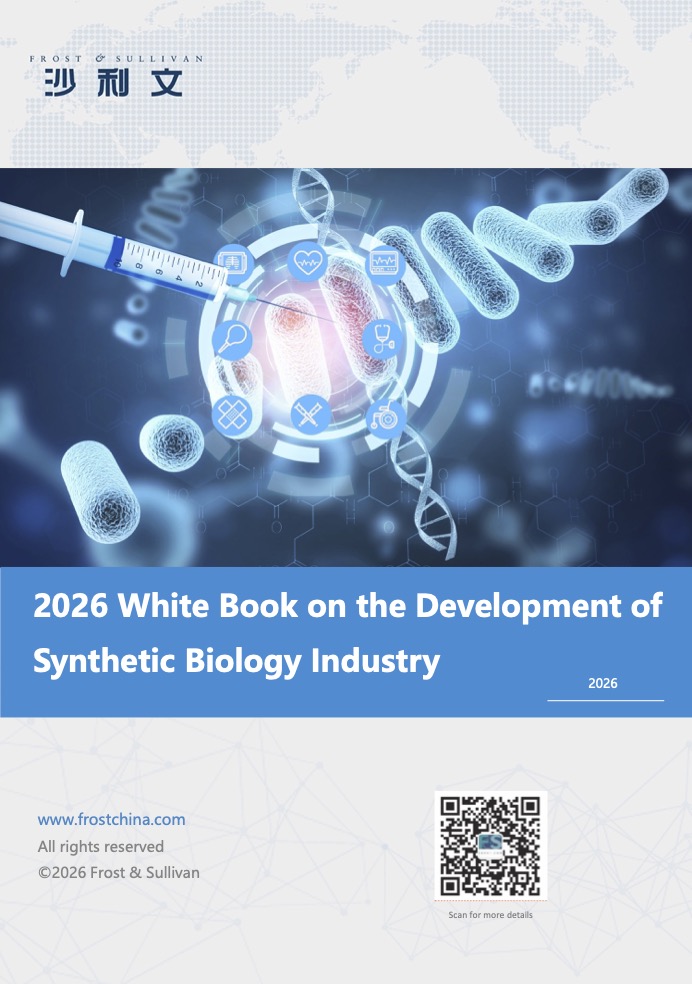
View our Complimentary White Book
Amid the deep convergence of the global technological and industrial revolutions, synthetic biology and biomanufacturing are evolving from laboratory research into pilot scale-up, industrial translation, and end applications—a “new quality productive force” that drives the iteration and modernization of productivity. As a core innovation engine of change, engineered approaches such as gene editing and metabolic pathway design overcome the limited performance and narrow scope of traditional microbial strains, enabling original “from-zero-to-one” innovation. Continuous upgrades in precision fermentation and high-efficiency purification are also accelerating the industrial translation of large-scale production, with biomanufacturing fully demonstrating its comprehensive innovation value.
Policies for synthetic biology and biomanufacturing continue to deepen, and the industry governance framework keeps improving. Globally, the industry faces many bottlenecks—particularly testing protocols and safety assessment methods for novel, human-designed ingredients that have never existed in nature. Building a scientific, efficient, and internationally recognized technical assessment system remains a challenge. China is gradually establishing a governance mechanism coordinated across health, agriculture, and other agencies, further normalizing and institutionalizing corporate compliance and market access, and reinforcing—at the policy level—the high-quality development of synthetic biology toward “stronger regulation, quality, and order.”
The penetration of bio-based materials into packaging, textiles, and consumer goods keeps expanding, rapidly approaching the economic tipping point for replacing petroleum-based products. Meanwhile, gene therapy, cell therapy, and AI-driven drug discovery continue to draw market attention; living drugs and gene-editing therapies are advancing rapidly and may enter a window of intensive launches. As regulatory systems for access, application, and commercialization grow more refined, companies with integrated R&D, manufacturing, supply chain, and commercialization capabilities will strengthen full-chain deployment. Companies with defined products, clear industrialization progress, stable revenue, and verifiable paths to profitability will be favored by capital and gain the first-mover advantage.
Download this complimentary White book to discover:
Analysis of Synthetic Biology Industry Chain
Analysis of Global Synthetic Biology Policy Environment
Analysis of Synthetic Biology Investment & Financing Events
Analysis of Challenges and Future Trends in the Synthetic Biology Industry
Default PDF Reader
Register to Download the Blue Book To-go
60 YEARS OF INSIGHTS
Our Global Initiatives

ABOUT THE ANALYST
Peng Wang


About Our Firm
Frost & Sullivan